How Johnnie Walker Black Label Is Made: The Craft Behind the Blend
Part 3 of 5
Worth the Dram? Discovering Johnnie Walker Black Label
In the last part, we saw how Johnnie Walker’s history set a house style built on consistency. Now let’s look at the craft itself — because the way a blend like this is made is exactly what produces the flavour we’ll be tasting next.
What’s actually in the bottle
Johnnie Walker Black Label is a blended Scotch whisky, which means it’s made by combining single malt whiskies with grain whiskies from across Scotland. In this case, it’s a blend of around 40 different whiskies — some single malts, some grain — all of which have been aged for at least 12 years.
That’s a lot of moving parts. And it’s why the craft matters so much.
Why it’s a little smokier
Here’s what sets Black Label apart from a smoother blend like Chivas Regal 12: it has a distinctly smoky character. That comes from the malts in the blend — some of the single malts are made with peated barley, which gives that whisky smoke flavour. It’s not a heavy, medicinal peat like you’d find in an Islay whisky — it’s more of a gentle, Highland smoke that sits underneath the sweetness.
That balance of smoke and sweetness is the signature of Black Label.
The master blender’s art
With around 40 whiskies to bring together, the master blender is the real star. They nose and sample the whiskies, then select and marry them into a single, consistent recipe that tastes the same every time. It’s a skill honed over decades — and Johnnie Walker has some of the most respected blenders in the business (Jim Beveridge, and now Emma Walker).
The aim, as they put it, is to take many different flavours and make something greater than the sum of its parts. Rich enough to be interesting, smooth enough to be easy, and identical in every bottle.
Twelve years and 40%
The “12 year old” on the label means the youngest whisky in the blend has matured for at least 12 years. It’s bottled at 40% ABV — the standard for Scotch — and it’s chill-filtered and lightly coloured.
Why this craft explains the taste
So now you can see why Black Label tastes the way it does: a foundation of grain whisky for smoothness, a range of single malts for depth, some peated malts for that gentle smoke, and a master blender pulling it all into a consistent whole. The smokiness isn’t an accident — it’s deliberate.
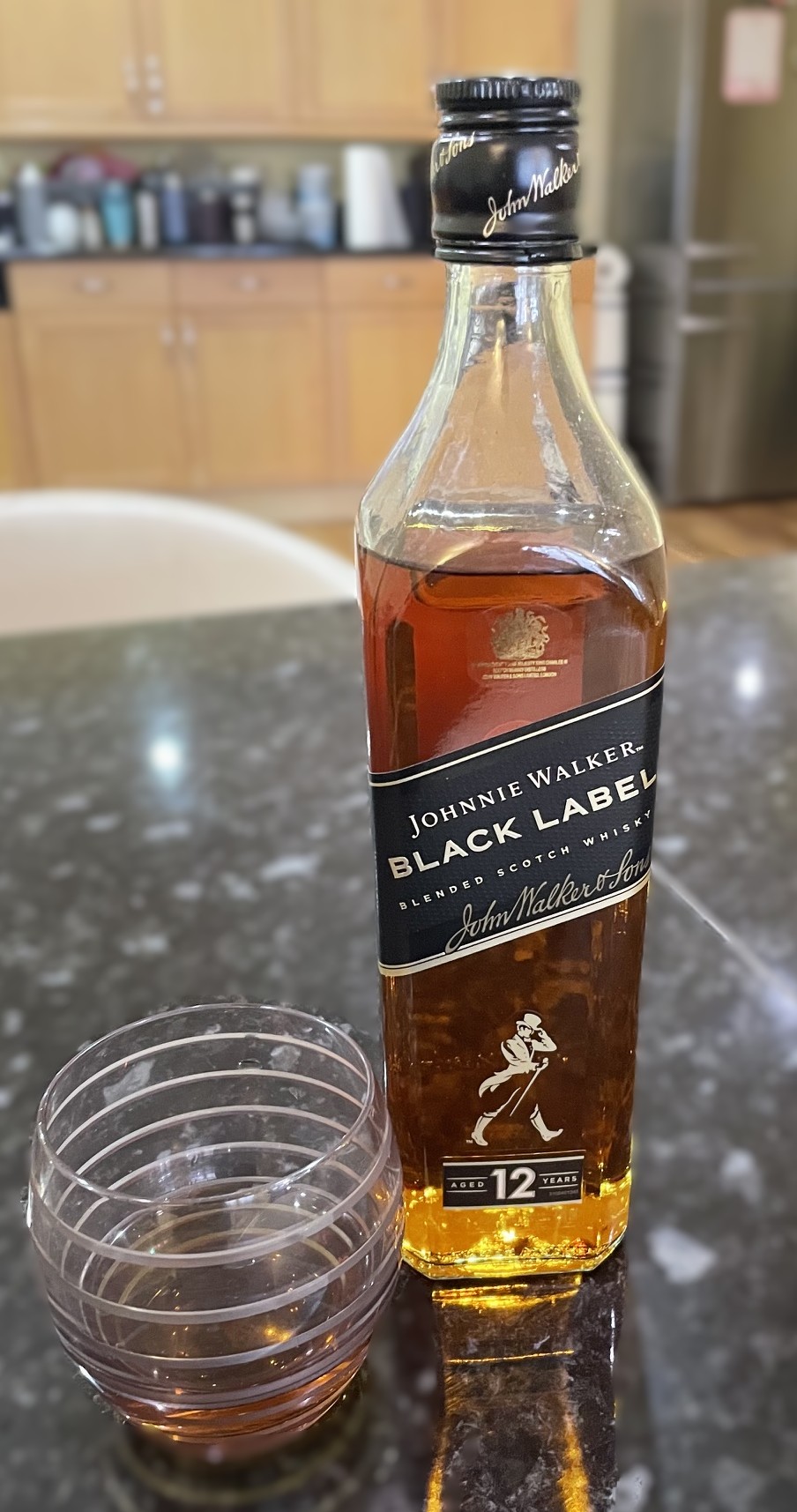
You can see the bottle we’re talking about here: Johnnie Walker Black Label Blended Scotch Whisky (ad) .
Next up: what all that actually means in the glass — the tasting notes you should expect, and how to find them. See you there. (Drink responsibly, and only if you’re 18+.)